First-generation tools take off immediately and let the pilot fix the problems mid-air. The second generation refuses to leave the hangar until the airframe is solid. The difference is not speed. It is where the work happens.
Tabrez Alam
July 1, 2026 · Founder, eety.ai
It is not the exhaustion of doing too much work. It is the exhaustion of doing the same work twice.
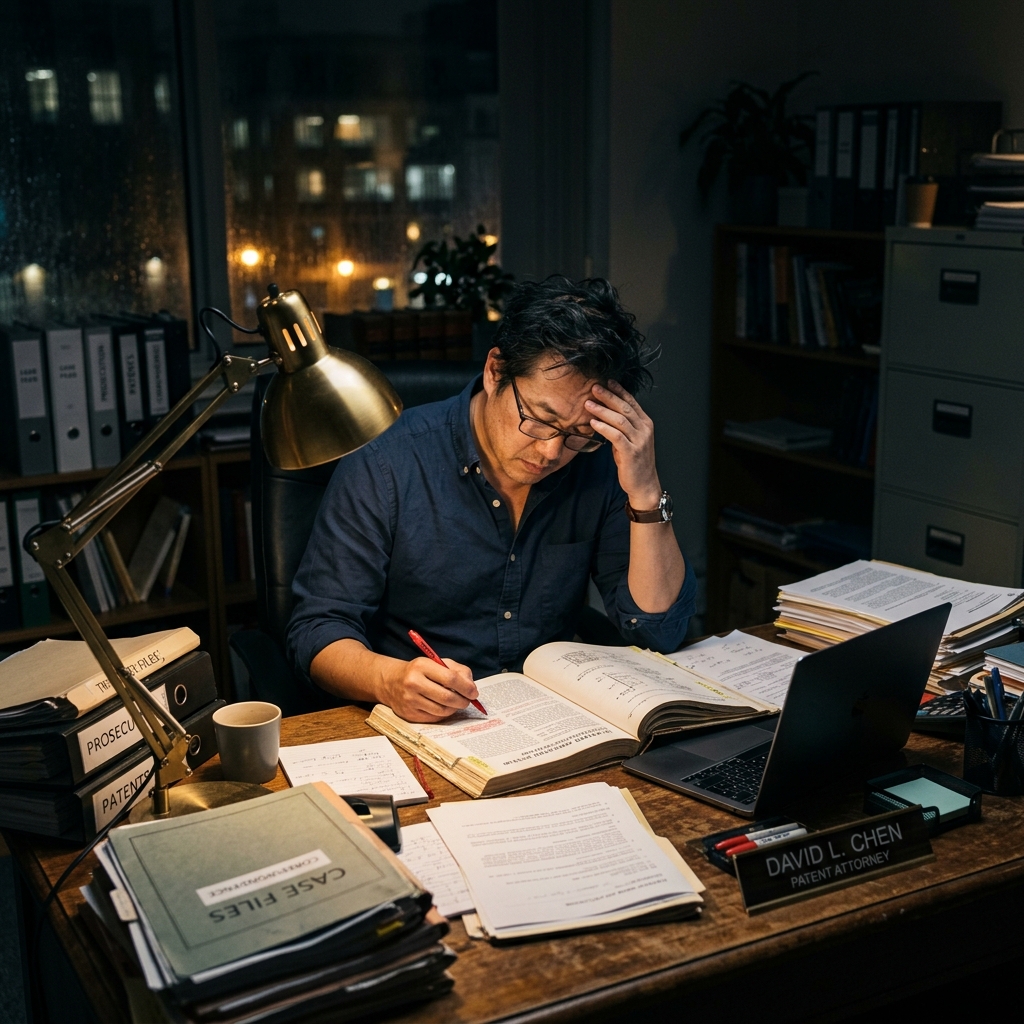
The tool generates a draft in minutes. Twenty-eight pages. Thirty-two pages... You feel, briefly, that something remarkable has happened. Then you start reading. Paragraph seven describes a feature the inventor never mentioned. Claim 9 introduces a limitation that collapses the entire application to a single embodiment. The abstract references a sensor array that does not appear anywhere in the specification. These are not typos. They are inventions. The AI has, quite casually, expanded your client's disclosure by about 18 percent and attributed every addition to your client.
So you fix it. Not from scratch; from the output. You rewrite the paragraph. You restructure the claim. You delete the sensor array. You spend two hours doing exactly what the tool was supposed to spare you from doing. The takeoff was fast. The landing took longer than the flight.
This is the first generation of AI patent drafting in one paragraph. Remarkable at takeoff. The pilot problem starts somewhere around cruising altitude.
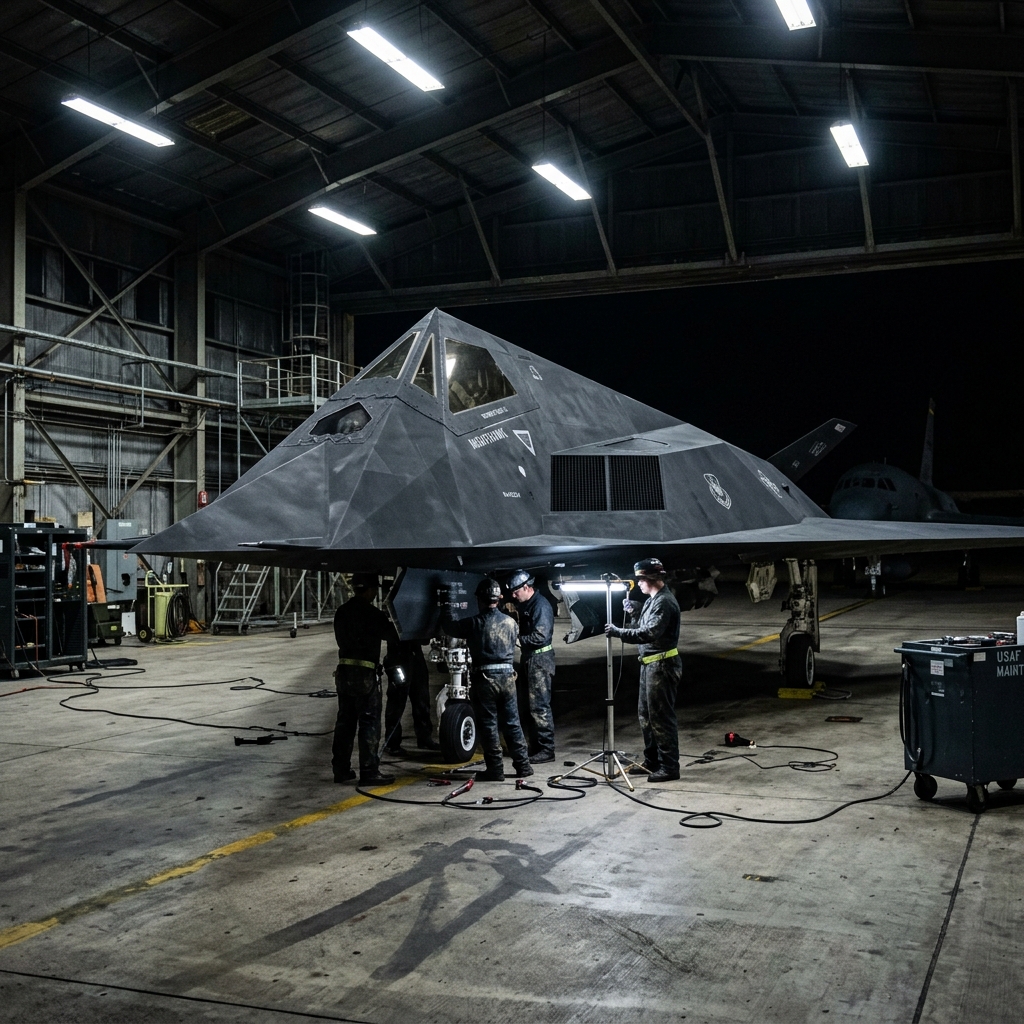
In military aviation, a conventional jet is fast, capable, and entirely dependent on the pilot to survive a hostile environment. The aircraft is excellent. The survivability depends on how good the human in the cockpit is; how quickly they can read the radar, adjust altitude, deploy countermeasures. The threat management is the pilot's operational problem, handled in real time, during the mission itself.
A stealth aircraft is built differently. The defence against radar detection is not something the pilot manages. It is engineered into the airframe before the aircraft ever leaves the ground. The geometry of the fuselage, the angles of every surface, the material composition of the skin; all of it exists to solve the radar problem structurally, so the pilot is not spending cognitive load solving it operationally. The pilot still flies. The pilot still makes decisions... But one entire category of threat has been removed from the in-flight workload.
Actually, let me be more precise here, because the analogy runs deeper than just invisibility. It is about where the hard work happens. A conventional jet solves the detection problem during the mission. A stealth jet solves it during the design phase. By the time the mission begins, that particular problem is already gone.
This is the exact distinction between the first and second generations of AI patent tools. Not the quality of the language model. Not the speed. Where the work happens; and who does it; and when.
This is what the first generation actually costs.
Not the generation time. The review time.
Before eety.ai generates a single word of a patent application, it runs what I would describe as a pre-flight diagnostic. The invention disclosure is evaluated against a 15-point engineering model. Each point corresponds to a logical requirement of a defensible application: is the technical problem clearly stated; is the proposed solution causally connected to that problem; are the key components described with enough specificity to support the claims that will need to be written; does the described embodiment actually function the way the inventor says it does.
If the answer to any of these is unclear or absent, the system does not draft. It asks. Targeted, specific questions directed at the attorney; to resolve with the inventor, or to answer from existing file notes. The draft does not exist until those questions have answers.
This is the stealth airframe in product form. The hallucination problem; the radar signature of every first-generation AI patent output; cannot exist in the final application because its preconditions were eliminated before drafting began. Every sentence is traceable to a specific answered question. There is no unanswered gap for the model to fill with a confident guess. No room for an invented sensor array, because the system already knows exactly what components exist and what each one does.
The pre-flight diagnostic flags every gap in the technical narrative. An undescribed feature cannot become a hallucinated claim element because the system already knows it is undescribed. It asks about it rather than inventing it.
Each limitation in Claim 1 links back to a specific answer in the pre-flight record. There is no floating langauge because there is no floating logic. The attorney can point to where every word came from.
This is the one that actually changes the job. You are not reading the output to find what the model invented. You are reading it to decide what to emphasise, what scope to push, what to hold back for prosecution. That is attorney work. The hallucination hunt was not. :)
I mentioned this framing to a young chap who runs a solo IP practice in Pune. He had been using one of the first-generation tools for about nine months and was, by his own count, spending somewhere between Rs 12,000 and Rs 15,000 worth of billable time per application on post-draft review alone. He told me this without embarrassment, which I found I respected. He had recently bought a second monitor specifically to read AI drafts on one screen while keeping the original disclosure open on the other. He said the tools were still faster than not using them.
He was right. They are. Which is almost the problem.
Because the question underneath that number is not whether the tool is saving him time. It is whether the time being saved at the front is worth more than the time being spent at the back; hunting for what was invented on his client's behalf by a model that was filling unanswered gaps with plausible prose.
I did not push that line of thinking. He was about to get on a call, and I did not want to be the person who made his afternoon worse. :( But the number stayed with me.
I am paraphrasing slightly here, but the exchange is close. That last line I remember with more precision.
That is the whole brief for the second generation. He did not describe a better language model. He described a traceable one. He wanted to be able to point to every sentence and say: this came from the inventor. Not: I think this came from the inventor; let me check.
First-generation tools save you time at the front. You receive a 30-page draft in four minutes instead of four days. That is the pitch, and it is genuinely true.
Second-generation tools save you time at the back. The post-draft review drops dramatically because there is nothing to hunt for. No hallucinated components. No invented features. The draft does not contain guesses. That is also true, and it is the thing the stealth jet analogy captures most directly.
But the third thing; the one I have not seen in any comparison chart; is what happens to you during the process itself. When you are answering eety.ai's pre-flight questions about your client's invention, you are not reviewing AI output. You are thinking about the invention. You are mapping the technical architecture. You are finding the gaps before the draft exists. Which means that by the time the draft arrives, you understand the invention at a depth that would have taken two or three inventor interviews to reach by the conventional method.
This is what the mediocracy of first-generation output conceals. The time saved at the front does not just get spent at the back on review. It gets spent on the relationship between you and the invention itself. And that relationship is, in the end, what the quality of the patent actually depends on.
Actually, wait. I want to go back to something I said earlier.
I said second-generation tools "refuse to leave the hangar until the airframe is perfect." That is not quite right, and I should not leave it sitting there uncorrected. The hangar doors open when the questions are answered; not when the answers are perfect. The system is not looking for a flawless disclosure. It is looking for a complete one. A 91 percent confidence score is enough to begin drafting. The point is not to build the ideal application before the first word is written. It is to build the honest one... the one where every sentence has a source and every gap has been acknowledged rather than quietly filled.
The stealth jet does not promise a better mission. It promises a more survivable one. The pilot still has to fly; still has to make decisions; still has to land the aircraft at the end. The stealth geometry does not replace the pilot. It removes one category of threat from the pilot's operational load, so the pilot can concentrate on the things that actually require a pilot to be present.
This is what the second generation of AI patent tools is trying to do. Not remove the attorney... Remove the hours the attorney spends doing things that are not attorney work.
If you are currently spending more than thirty minutes reviewing an AI patent draft for factual accuracy; checking whether the features described actually match the disclosure; you are not using the right tool. You have become the countermeasure. :)
"The point is not to build the ideal application before drafting begins. It is to build the honest one."
I keep trying to find a simpler version of this argument. But whenever I simplify it, something true falls out. Maybe the complexity is the point.
P.S. For the attorneys who have been telling clients that AI drafting tools are "all the same": I understand why you say that. The first generation made a strong first impression. The second generation makes a different kind of case; one that takes slightly longer to appreciate. If you have thirty minutes, upload a real disclosure and see what happens before the draft exists. That thirty minutes will do more than this article can. :)
The questions it generates are not obstacles. They are the invention, mapped. Most attorneys say the diagnostic alone is worth the session, before a single claim is written.