Invention Harvesting · Novelty Assessment

Decide what deserves a patent
before you spend drafting money.

Every disclosure gets a 15-query state-of-the-art search, claim charts, and a prior-art density verdict for 2 tokens ($20). The expensive question, should we file, gets answered before the expensive work begins.

Start Free

Templates for 5 patent offices (USPTO, EPO, PCT/WIPO, UKIPO, IPO India) · 25 free tokens at signup · No credit card required
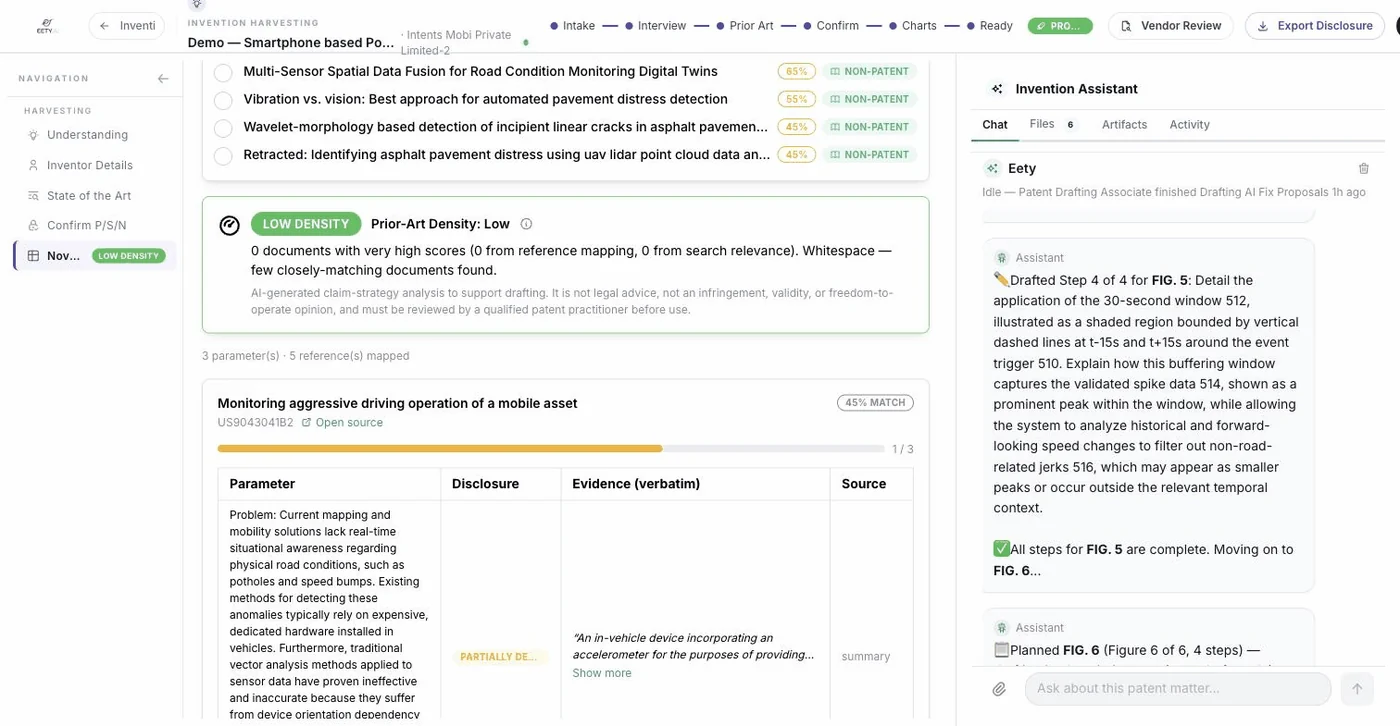
The end of a harvest run: a Low density verdict, with the mapped references beneath it.
The end of a harvest run: a Low density verdict, with the mapped references beneath it.
Why Harvest

Triage for your disclosure pipeline.

A hospital does not send every walk-in to surgery. A triage nurse takes vitals in minutes, and the surgeon's time goes to the cases that need it. Most invention disclosure management works the opposite way: forms go into a queue, a committee judges them on gut feel, and the evidence only shows up after drafting has started. We call the fix invention harvesting: invention triage that ends in a filing decision with evidence attached, not a status update.

The Old Way
Week 0

An inventor fills in a disclosure form. It joins a queue.

Week 6

The review committee meets. Ten minutes per invention, decided on gut feel and on how well the inventor presents.

Week 10

A search budget appears for the one idea somebody championed. The quiet disclosures are never searched at all.

Month 4

Close prior art surfaces mid-drafting, after real money is committed.

With eety
Min 0

Upload the disclosure exactly as the inventor wrote it. No intake form.

Minutes

15 structured searches run: 10 against patent registers, 5 against scholarly literature. Every reference labeled by which search found it.

Same day

You confirm Problem, Solution, and Novelty; claim charts and a density verdict come back with receipts.

Decide

Promote to drafting with a jurisdiction picked, or park it, having spent $20 instead of thousands.

How It Works

Six steps from rough disclosure to a defensible decision.

1

Upload the inventor's disclosure

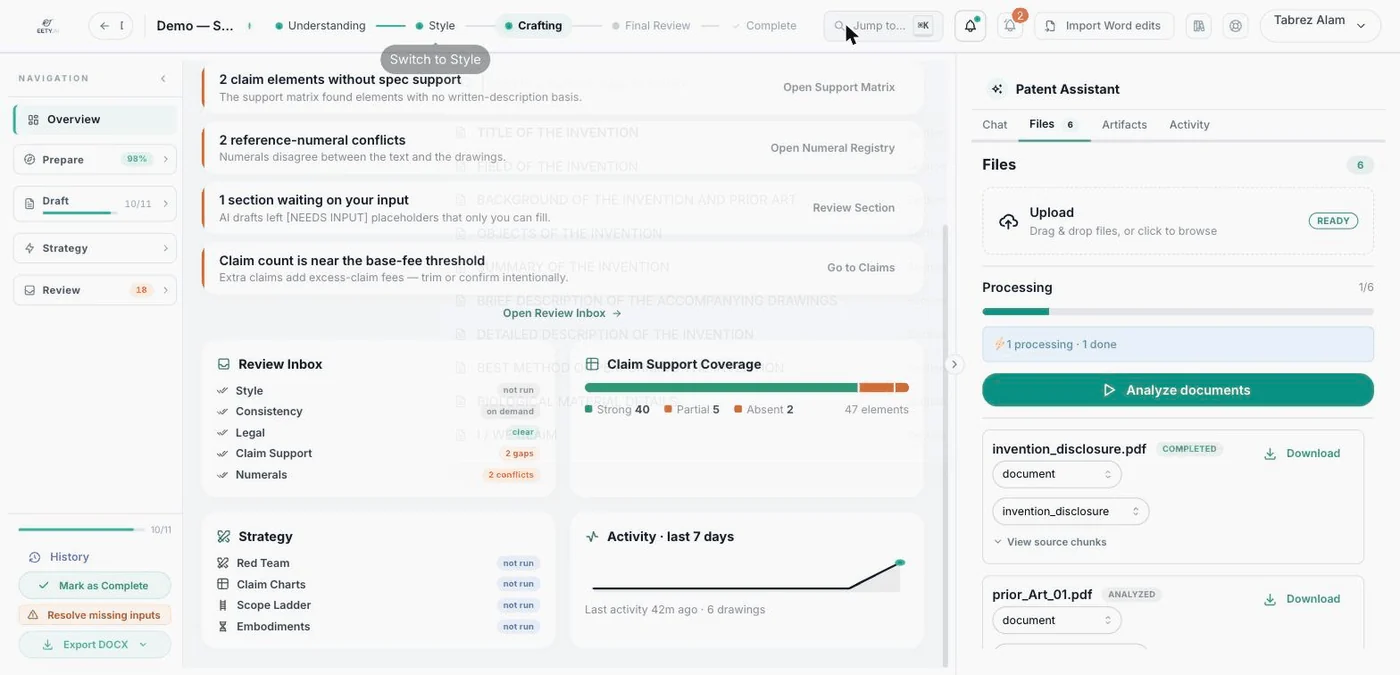
Bring whatever the inventor actually wrote: a slide deck, a lab note, three rough paragraphs pasted from an email. Eety reads it as it is. There is no intake form to force the idea through before anyone looks at it.

The Files panel taking the disclosure as it is, with no intake form to fill in first.

The Files panel taking the disclosure as it is, with no intake form to fill in first.

2

Eety interviews the inventor

A careful associate does not pad a thin file with guesses; they pick up the phone and ask the inventor. Eety does the same. It builds a structured understanding of the invention, lists exactly what is missing, and puts those questions to the inventor.

Questions only the inventor can answer, like what makes the mechanism work or what was actually built, are routed to the inventor and stay open until answered. Where public research can fill a gap, Eety offers a researched suggestion, marked as a suggestion, for the inventor to accept or correct.

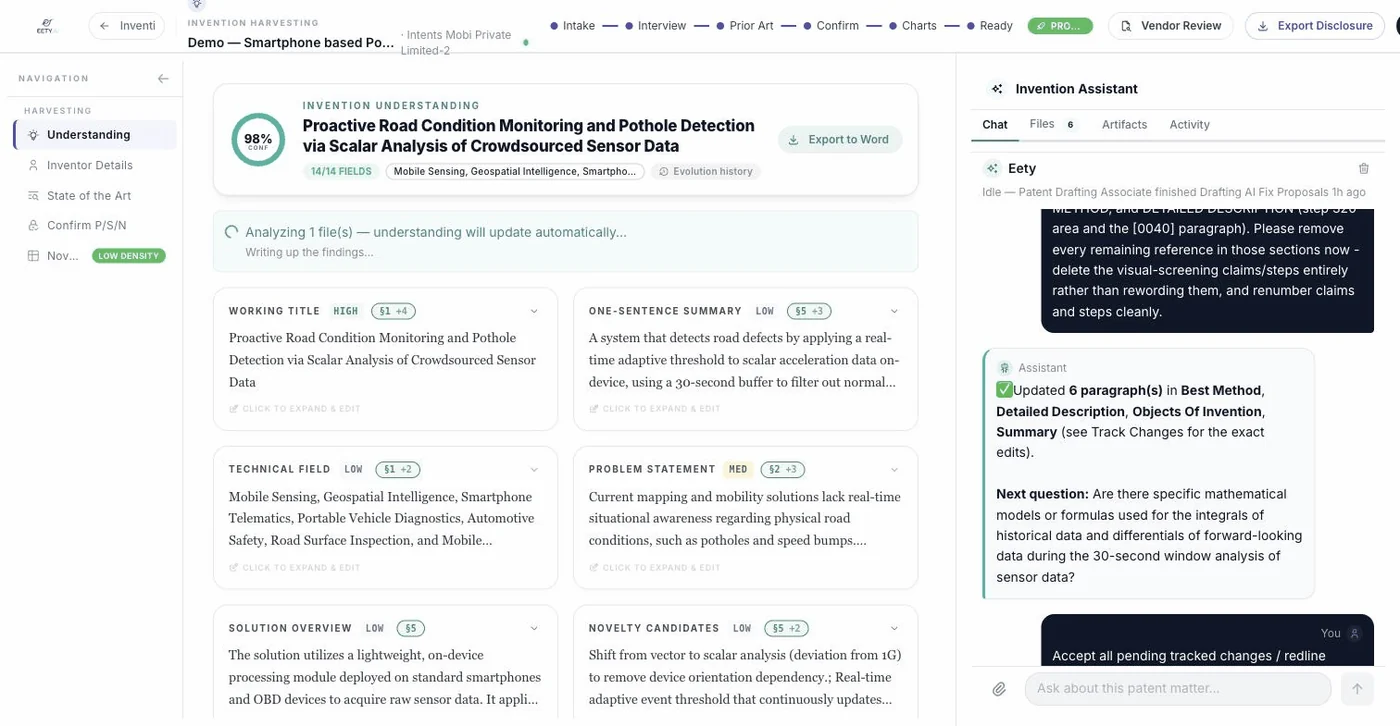
The interview in progress: the invention understanding on the left, Eety’s question and the inventor’s answer on the right.

The interview in progress: the invention understanding on the left, Eety’s question and the inventor’s answer on the right.

3

The state-of-the-art search runs

Think of two librarians: one lives in patent registers, the other in journals, and they phrase the same question differently. Eety runs a 15-query ladder built from the confirmed understanding: 10 patent-register searches and 5 scholarly-register searches. Each reference comes back labeled with which of the 15 queries found it, so you can see exactly how every piece of evidence entered the file.

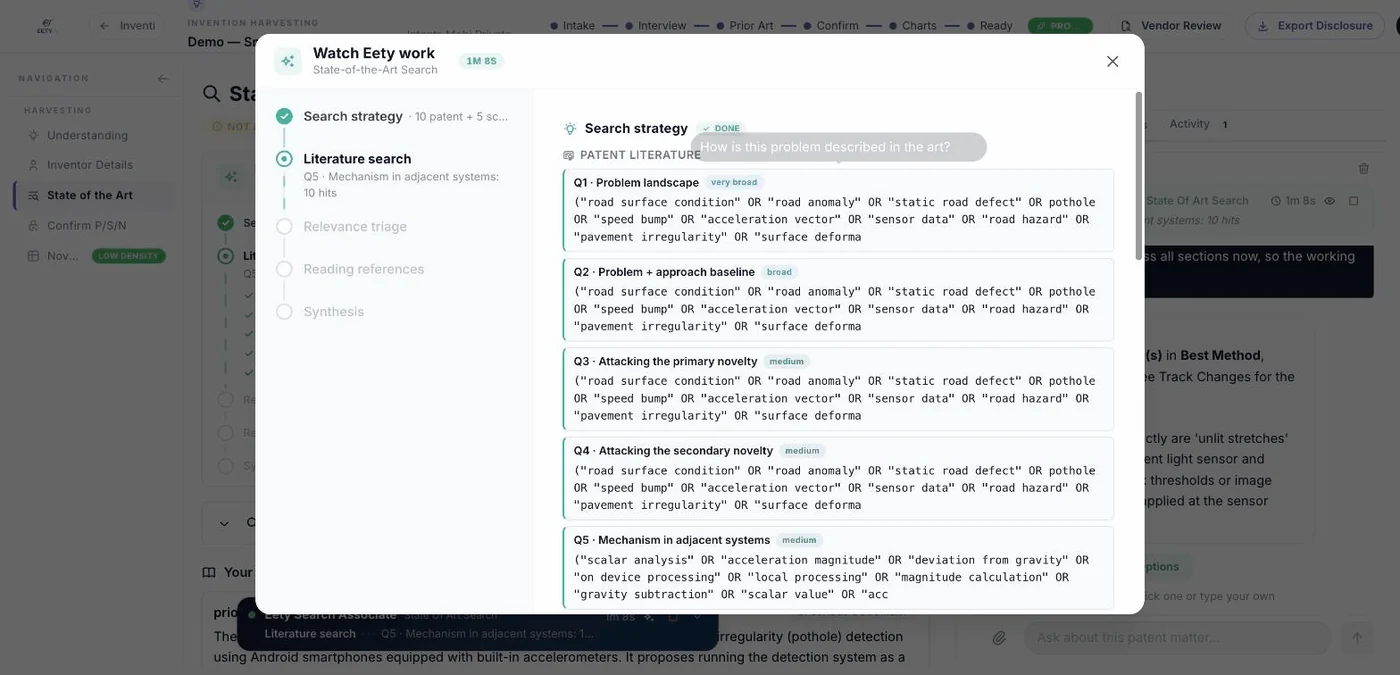
The search ladder mid-run: patent-register queries with their breadth labels, completing one by one.

The search ladder mid-run: patent-register queries with their breadth labels, completing one by one.

4

Confirm Problem, Solution, Novelty

The invention is reduced to three statements: the problem it solves, the solution it proposes, and what is claimed to be new. You confirm or edit each one. The verdict that follows is only as good as these three lines, so they are put in front of you rather than buried on page nine of a report.

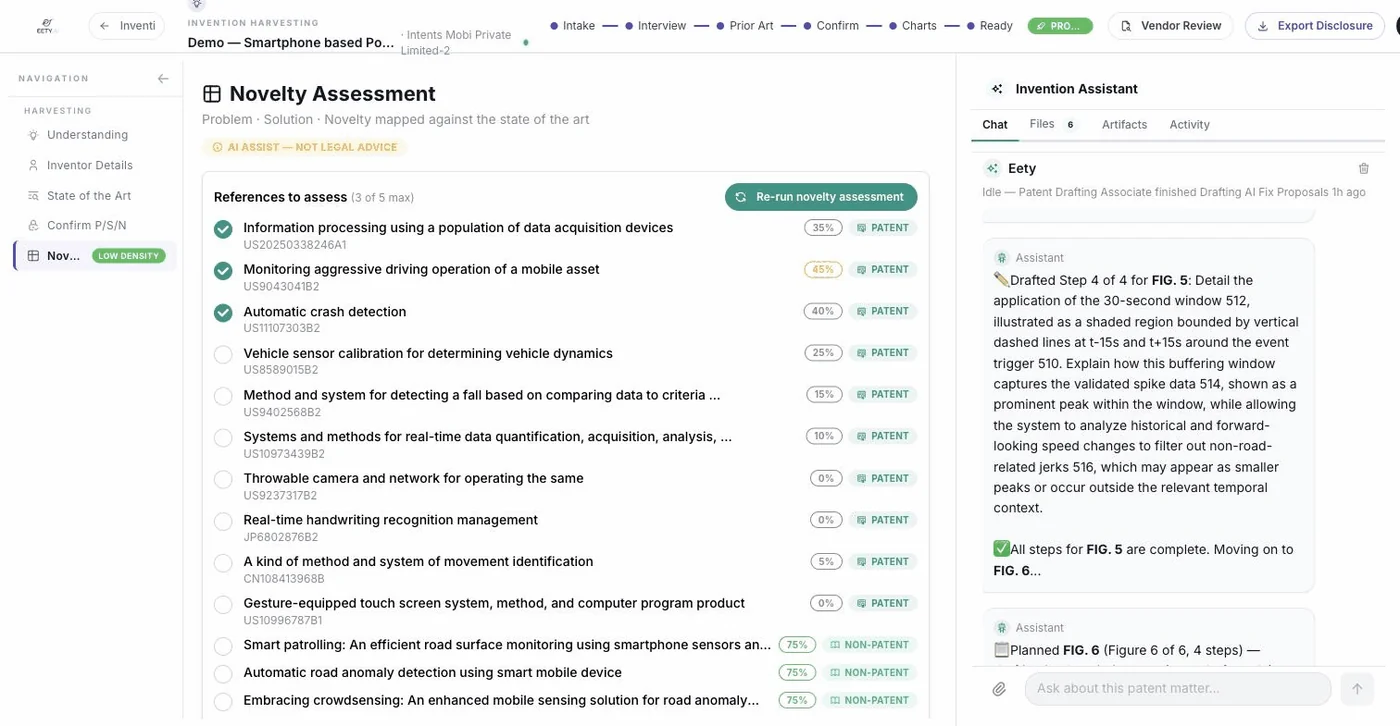
Every returned reference scored for closeness, with patent and non-patent sources kept separate.

Every returned reference scored for closeness, with patent and non-patent sources kept separate.

5

Claim charts and the density verdict

It works like a title search before buying land: you find out who else has claims on the ground before you build on it. Eety maps the closest references into claim charts and renders a prior-art density verdict. Low means whitespace. High means a crowded field. Either way it comes with receipts: every reference is labeled Novelty threat, Combination risk, or Background, so the verdict can be audited, not just believed.

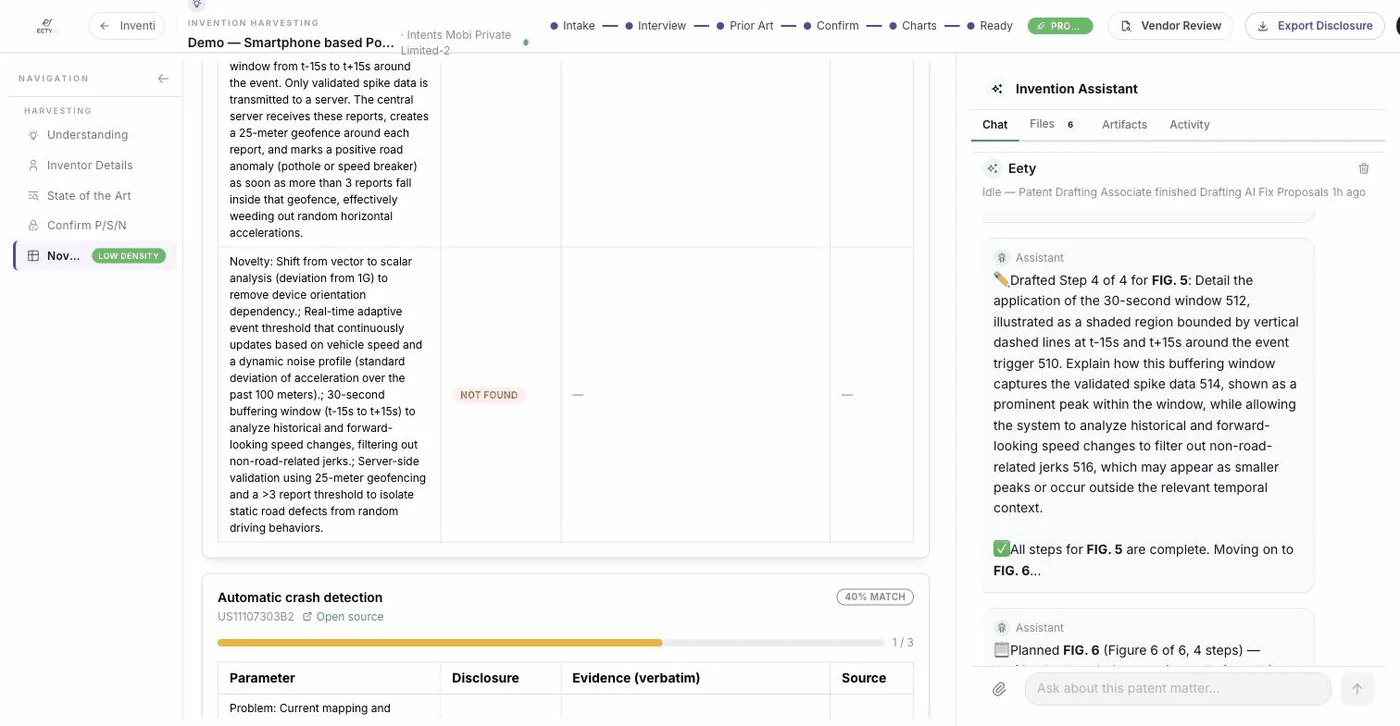
A claim chart row: the novelty element marked NOT FOUND in the closest reference, with verbatim evidence beside it.

A claim chart row: the novelty element marked NOT FOUND in the closest reference, with verbatim evidence beside it.

6

Promote to drafting, or park it

Promotion is one action: pick a jurisdiction (USPTO, EPO, PCT/WIPO, UKIPO, or IPO India) and the confirmed understanding, interview answers, and search results carry straight into drafting. Or park the invention with its evidence on file. Either way, the decision cost $20, not thousands in drafting and attorney time.

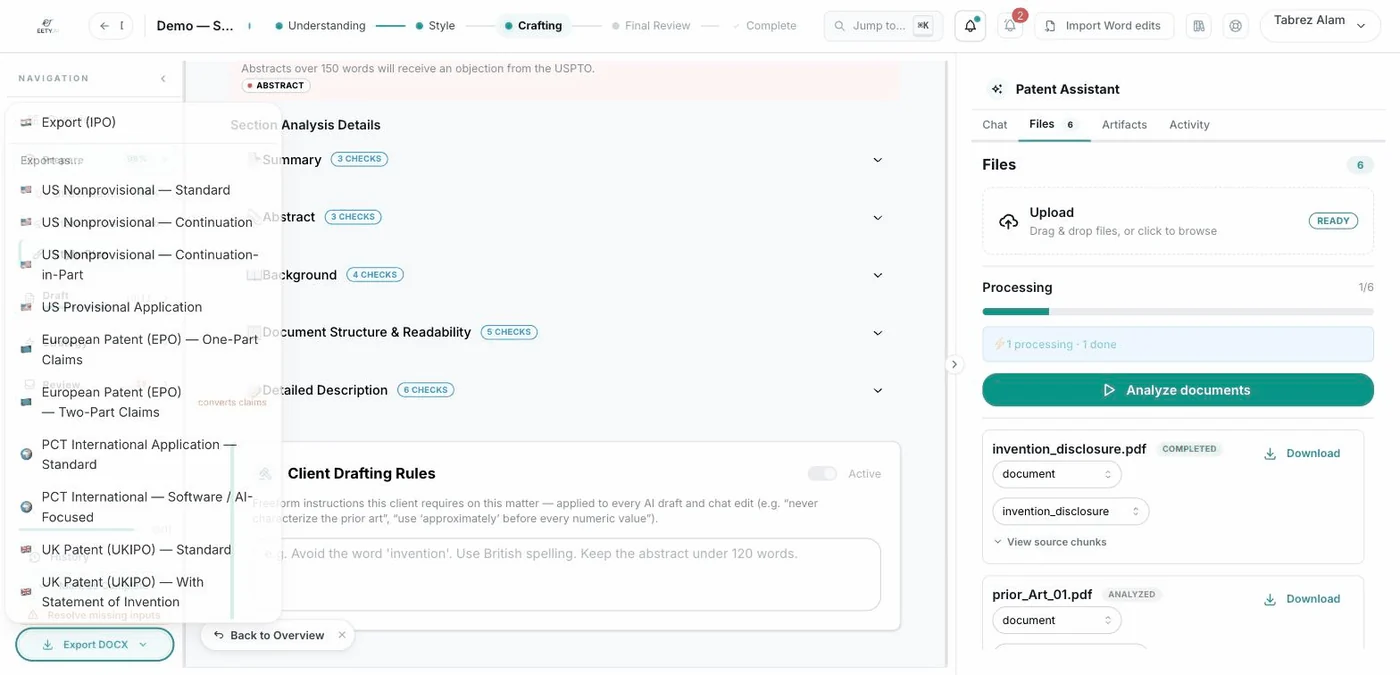
The jurisdiction templates an application can be prepared for, chosen before drafting starts.

The jurisdiction templates an application can be prepared for, chosen before drafting starts.

The Difference

Judgment before spend.
Disclosure tools stop at routing.

Invention disclosure management software collects forms, assigns reviewers, and tracks status. That is filing paperwork about the invention, not judging it. None of those tools tell you whether the field is already crowded.

Eety renders a prior-art density verdict before a single drafting dollar is spent, and the claim is checkable in the product: open any harvested invention and the verdict lists the references behind it, each labeled with the search that found it and the risk it carries. A verdict without receipts would be a bug, and you would be able to see it.

On price: enterprise patent software commonly runs $30k to $100k+ per year behind a demo call (their model, as the industry describes it). A harvest here is $20, on a public pricing page, with 25 free tokens to start.

What a verdict looks like
Density: Medium after 15 searches

US 2021/xxxxxxx, found by patent query 4

Novelty threat

EP 3xxxxxx, found by patent query 7

Combination risk

Journal paper, found by scholarly query 2

Background

Illustrative layout. In the product, every row links to the reference and the query that produced it.

$20

per invention (2 tokens), charged once per matter. Reruns cost nothing extra.

15

structured searches per harvest: 10 patent-register, 5 scholarly-register. Minutes, not weeks.

3

provenance labels on every reference: Novelty threat, Combination risk, Background.

12

inventions covered by the 25-token signup grant. No credit card required.

FAQ

Honest answers on harvesting.

Is this a professional patentability search?

No. A harvest is a structured state-of-the-art sweep: 15 fixed searches, verbatim-verified evidence, and a density verdict built for triage decisions. It tells you where drafting money should go. For the filing decision on a specific application, an opinion from a registered search firm is still the standard, and we do not pretend otherwise.

What exactly is the inventor interview?

After reading the disclosure, Eety builds a structured understanding of the invention and lists what is missing from it. It then asks the inventor those questions directly, in plain language, inside the matter. The interview exists because most disclosures are written in an afternoon and leave out details a search or a draft actually needs.

Does the AI make up answers to its own questions?

No. Questions critical to the inventive step, such as how the mechanism works or what was actually built and tested, are routed to the inventor and stay open until the inventor answers them. Where public research can answer a question, for example standard components or background definitions, Eety offers a researched suggestion marked as a suggestion, which the inventor can accept or correct.

What do Low, Medium, and High density mean?

The verdict summarizes how crowded the field around the confirmed novelty looks after all 15 searches. Low means the searches came back thin: likely whitespace. High means a crowded field with close references. Every verdict lists the references behind it, each labeled Novelty threat, Combination risk, or Background, so you check the receipts rather than trust the adjective.

What happens when I promote an invention?

You pick a jurisdiction (USPTO, EPO, PCT/WIPO, UKIPO, or IPO India), and the confirmed understanding, interview answers, and search results carry into drafting. Drafting is a separate service (5 tokens, $50 per matter) and does not begin until Eety's understanding of the invention passes a 90 percent confidence gate.

What does it cost to rerun the search?

Nothing. Harvesting is charged once per matter: 2 tokens ($20). Rerun the search after the inventor adds detail, or rerun the whole assessment, and the charge does not repeat.

One Matter File, Three Services

Decide what to patent. Draft it. Verify everything.

Triage your next disclosure today.

The 25-token signup grant covers 12 harvests. No credit card, no demo call required to start.

Start Free