For Individuals Career & Practice โฑ 8 min read

The patent attorney who
will thrive with AI

If you are reading this with a knot of anxiety in your stomach, that feeling is completely reasonable. I am also going to tell you what it is getting wrong. Because the part of your career that AI threatens is not the part that makes you good at your job.

TA

Tabrez Alam

April 15, 2026 ยท Founder, eety.ai

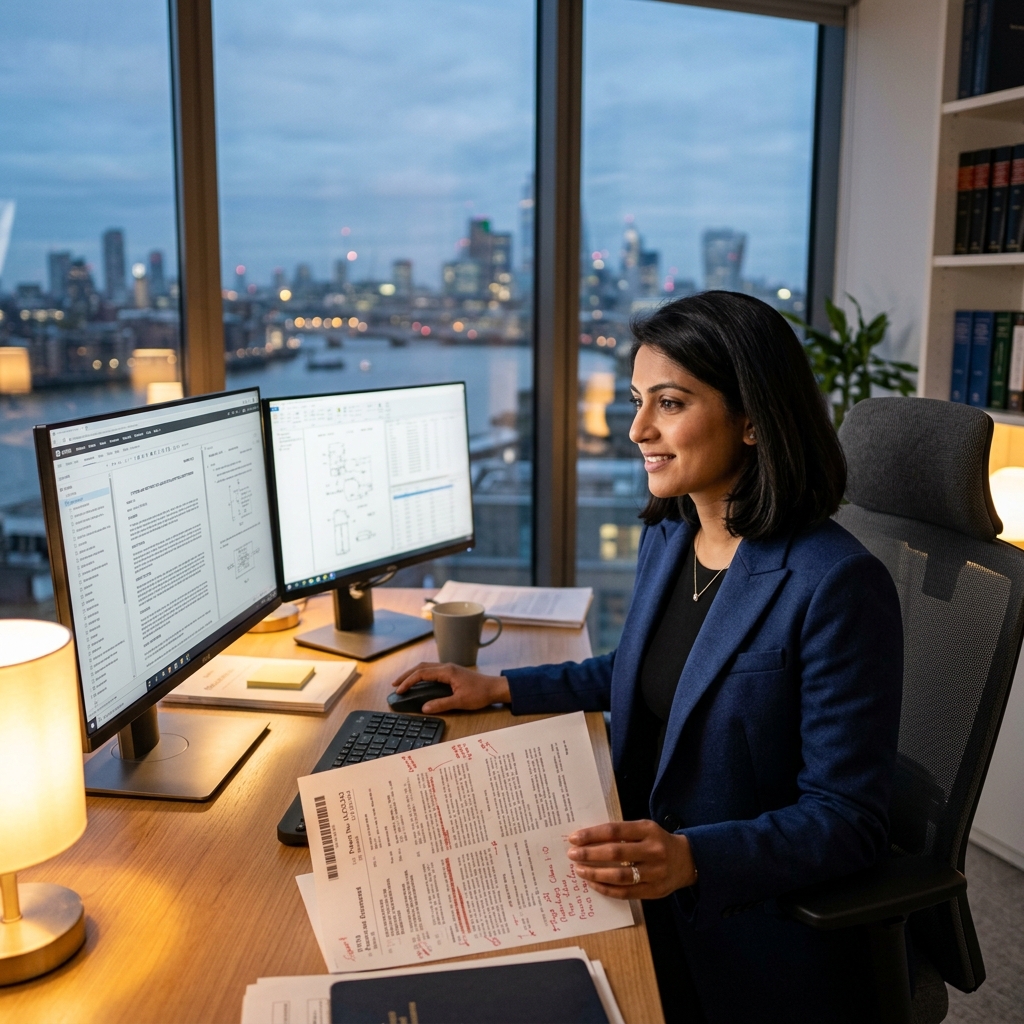
A female patent attorney working with AI drafting tools at her desk, calm and in control
Act I

Let us start with the honest part

I am going to start by saying something that probably nobody building an AI company for patent drafting says out loud: the anxiety that some patent attorneys feel about these tools is not irrational. It is not born from ignorance or technophobia. It is born from a completely reasonable reading of what is happening around them.

They have watched AI enter other professions. They have seen tools that were supposed to "assist" gradually replace the work those professions were built on. They are looking at tools like eety.ai and wondering: is this the beginning of the same story for me?

I want to answer that question honestly; which means I need to first separate what AI tools are actually replacing from what they categorically cannot replace. Because those are two very different lists.

The part of your career that AI threatens is not the part that makes you good at your job. It is the part that makes your day feel long.
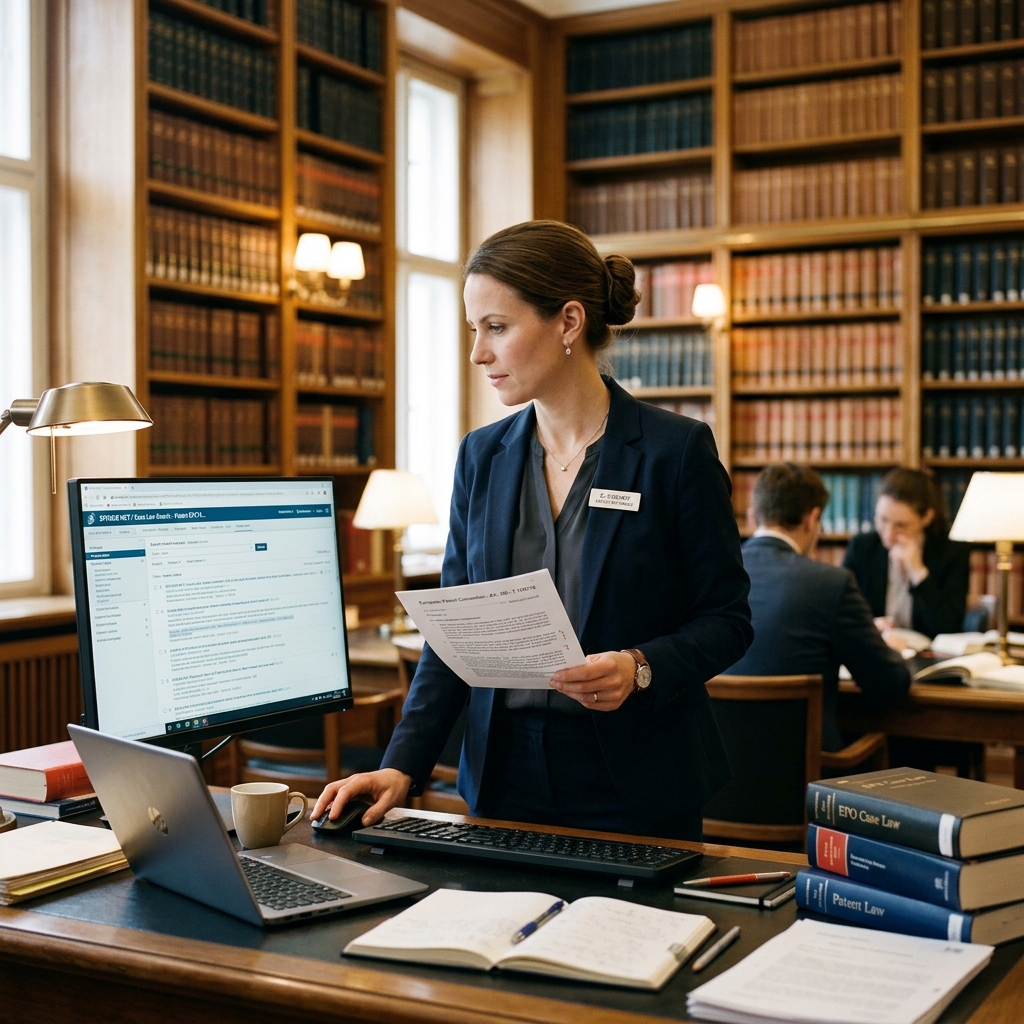
A patent attorney using legal research databases in a law library; technology amplifying human expertise

The attorney who learned the database was not replaced.
She became faster than everyone around her who did not.

Act II: The pattern

This has happened before.
The outcome was not what anyone expected.

In the early 1990s, legal research moved from physical libraries to electronic databases. Westlaw and LexisNexis arrived and suddenly a junior associate could search the entire body of case law in minutes instead of days. The prediction at the time: fewer research-focused attorneys would be needed.

What actually happened? The attorneys who learned to use the databases became dramatically more productive than the ones who did not. They could take on more complex cases, find better precedents faster, serve more clients with higher quality. The ones who refused to learn the databases on principle were outcompeted within a decade; not by the software, but by the colleagues who used it.

The software did not replace the attorney's judgment. It replaced the manual searching. And judgment, freed from manual searching, turned out to be worth significantly more.

Act III

What AI is taking. What it is not taking. These are different lists.

Here is the honest separation. AI tools for patent drafting are, right now, genuinely capable of taking over a specific class of tasks. And those tasks have something important in common: they are the tasks that most patent professionals would describe, privately, as the mechanical parts of the job.

AI is Taking
The mechanical layer of patent work
๐Ÿ“
First-pass claim generation
Turning a disclosure into a structured set of claims. AI does this faster. It does it at scale.
๐Ÿ”„
Dependent claim expansion
Generating the ladder of dependent claims from a solid independent. Tedious. Automatable.
๐Ÿ“„
Detailed description drafting
The long structured paragraphs that support every element. AI generates these well with proper context.
๐Ÿ”
Prior art summarisation
Scanning and synthesising prior art at a volume no human can match for speed.
AI Is Not Taking
The judgment layer. This is where you live.
๐ŸŽฏ
Scope judgement
Deciding how broad to go on claim 1 given this client's competitive landscape, this examiner's history, and this technology's trajectory.
๐Ÿค
Inventor relationship
The three-hour interview. The follow-up call. Knowing what the inventor meant versus what they said. This is irreplaceable.
โš–๏ธ
Prosecution instinct
When to fight an examiner, when to amend, when to appeal, and when the client's interests are better served by a narrow allowed claim than a broad rejected one.
๐Ÿงญ
Strategic portfolio advice
What is worth filing, what is not, and how this invention fits the client's broader IP picture. Judgment built over years.

These are not abstract qualities. They are the qualities that, in practice, determine whether a patent survives a challenge that nobody anticipated at the time of filing. The NTP v. RIM case; where $612.5 million turned on whether the attorneys had drafted system claims as well as method claims; is a precise real-world illustration. So is the Apple slide-to-unlock saga, where anchoring claims to a UI element rather than the underlying processing logic cost enforceability across three jurisdictions. The Relay Was in Canada and Patent the Engine, Not the Button are both worth an hour of your time if you want to understand what "prosecution instinct" and "scope judgment" actually mean in dollars-and-cents terms.

Act IV: What AI frees you for

The inventor interview is still yours.
It will always be yours.

There is a conversation that happens in every good patent attorney's office and it has never been, and will never be, replaceable by software. An inventor sits down. They explain their idea. And somewhere in the first twenty minutes, a detail emerges; something they mentioned almost in passing, a constraint, a workaround they found, a prior version of the design they discarded for reasons they had not thought to put in writing. And a good attorney catches it. Because they were listening for exactly that kind of thing.

That conversation requires experience, intuition, and trust. The inventor has to feel safe enough to share the imperfect version of the idea; not just the polished one they put in the brief. That safety comes from the attorney's presence, their questions, their way of treating the inventor's uncertainty as signal rather than noise.

AI is not in that room. AI has never been in that room. AI will not be in that room. What AI does is handle the work that happens after the room; so that the attorney who has that conversation can spend more time in more rooms, with more inventors, doing more of the thing they trained to do.
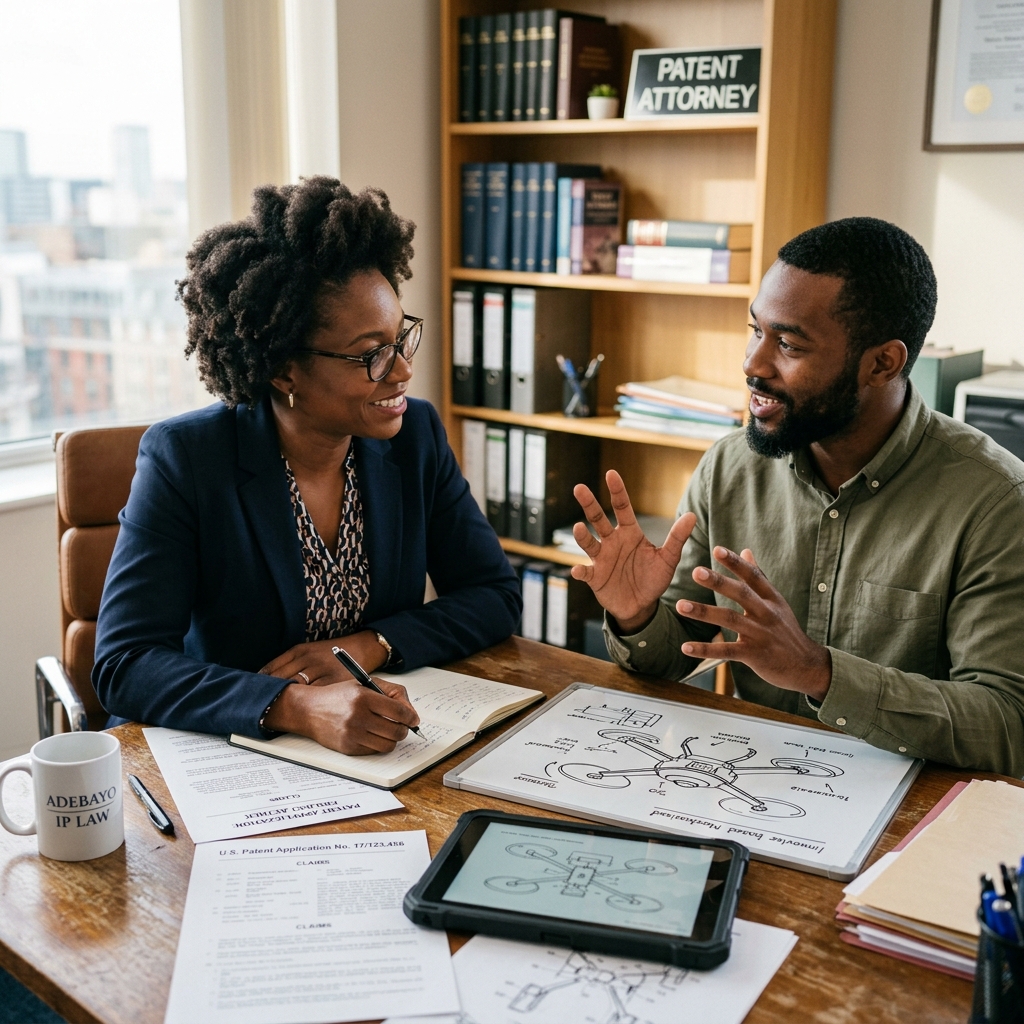
A female patent attorney in deep conversation with an inventor at her desk, a relationship AI cannot replicate

This conversation is yours.
It was never automatable. It still is not.

The close

The attorney I would not want to be right now

It is not the attorney using AI tools. It is the attorney who has decided that using AI tools is somehow beneath them; or who has concluded that these tools are a threat to their identity as a professional, and has therefore declined to learn how to use them.

That attorney's colleague, who did learn, is now doing the same quality of judgment work in less time. The mechanical parts of their week are handled. They have more hours for the high-complexity matters, the difficult inventors, the prosecution strategies that require thinking rather than typing. Their billing reflects it. Their clients notice it.

The attorney who is at risk is not the one reading this article and feeling anxious. It is the one who stopped reading after the first paragraph because they had already decided the answer. :(

If you are still here: good. The knot of anxiety was the right signal. It just needed to be redirected. Not towards the tools. Towards the question of whether you are using them yet; and if not, why not.

"The patent attorney who will thrive with AI is not the one with the best prompts. It is the one who uses AI for the mechanical work; so their judgment can do what judgment is actually for."

That attorney exists today. They are your colleague. They may also be you, six months from now. :)

See the mechanical parts handled

Upload a disclosure.
Watch what eety.ai takes off your plate.

Invention understanding. Gap-finding questions. Draft plan. Structured draft. All before you write word one. Your judgment is saved for the parts that need it.

In This Series