The Bigger Picture Access to IP ⏱ 7 min read

The inventor
AI forgot.

She had a genuinely good invention, understood its novelty, and had already decided not to file. The attorney's quote was more than her monthly salary. She is not the exception. She is the majority. And the conversation about AI displacing patent professionals is missing her entirely.

TA

Tabrez Alam

April 15, 2026 · Founder, eety.ai

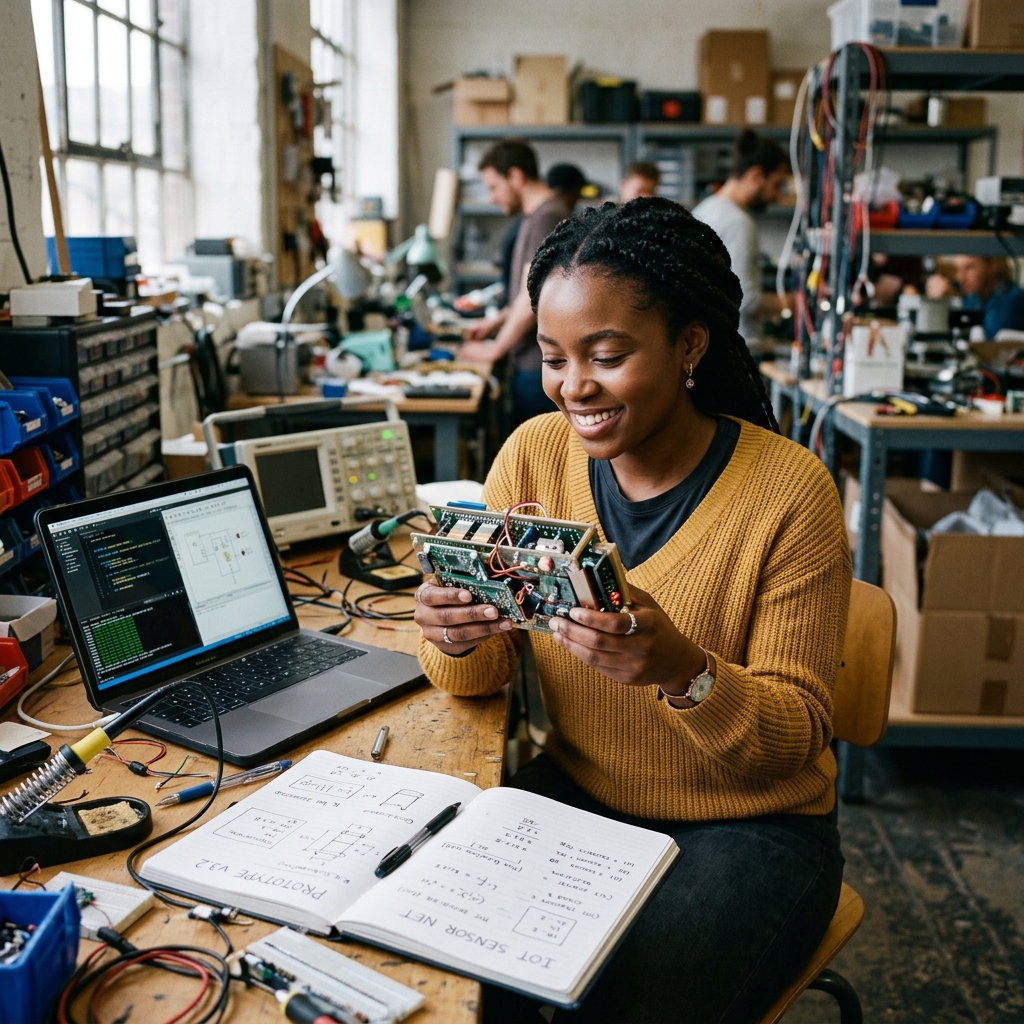
A young inventor holding her prototype, outside the formal system of patent protection
Act I

The conversation nobody is having

I was at a startup event about eighteen months ago. The kind of event where everyone is pitching someone, the coffee is bad, and the real conversations happen in the corridor between the official ones.

I got talking to a founder in her late twenties. She had built a genuinely novel sensor-based solution for a logistics problem; real innovation, real R&D behind it, the kind of thing that would have given a patent attorney something interesting to work with. She had done her homework: she understood what made it novel, she knew the technical prior art, she had even drafted rough claims in a notebook. She had done everything right.

She had also already decided not to file.

She had spoken to three patent attorneys. The quotes ranged between three and seven times her monthly salary at that point. She had a team to pay and a runway measured in months. The math did not work. So she closed the notebook, crossed her fingers, and got back to shipping product.

A young South Asian female inventor at a startup event, a genuine idea not yet protected

Real idea. Real novelty. Real invention.
Quote from the attorney: not real for this budget.

I have met something like eighteen versions of this person. Different technologies, different cities, different stages of "have I given up yet or am I still thinking about it." But structurally, the same situation. A protectable invention; and a barrier to protection that has nothing to do with the quality of the invention and everything to do with the economics of the legal service.

This is the inventor that the entire conversation about AI and patent professionals is somehow missing. The one not in the room. The one who decided before the pitch that the room was not for her.

Most
inventions
never file.

Not because they are not novel. Not because the inventors do not understand their value. Because the cost of professional patent drafting is, for the majority of founders, individual inventors, and small teams in the world, simply not reachable on any realistic budget.

This is the fixed assumption. And AI is about to break it.

Act II

The market everyone is fighting over is not the whole market

The current debate about AI and patent professionals assumes a fixed market: a fixed number of clients, a fixed volume of applications, and the question of how many professionals are needed to serve that fixed volume. Under this assumption, AI improving throughput does look like a headcount threat.

But the market is not fixed. The market is a subset; a surprisingly small subset; of the full universe of inventors who have protectable ideas and the motivation to protect them. The rest of the universe has simply been priced out.

Consider: a first-year provisional application in the US, handled by a moderately priced patent attorney, costs somewhere between two and five thousand dollars in professional fees. For the startup founder on a seed round, this is manageable. For the individual inventor in Bangalore, Lagos, or Bogota working on something genuinely novel, this is a year's savings. For the academic with a university disclosure and no commercialisation support; this is someone else's problem.

So those inventors do not file. Their inventions join the enormous invisible inventory of unprotected ideas that are either abandoned, quietly copied by competitors who do have IP budgets, or just left as prior art that will block someone else's application later.

AI in patent drafting is not dividing a fixed pie into smaller slices. It is making the pie bigger; by making professional-grade patent protection accessible to inventors who previously had no access to it at all.
Act III: What changes

Patent work that feels
reachable. Finally.

An AI-assisted patent drafting workflow changes the economics of patent work in one specific direction: it reduces the hours required for the mechanical parts of drafting. Invention understanding, claim structuring, detailed description generation, consistency checking; these take hours today and significantly fewer hours with purpose-built tools.

Fewer hours per application means a lower cost per application; which means an attorney using these tools can serve clients at price points that were previously not viable. The inventor who got a quote of five thousand dollars and walked away might, from an AI-equipped firm, get a rigorous, attorney-supervised first provisional for substantially less.

She does not stop needing an attorney. She still needs the judgment, the scope decisions, the prosecution strategy, the professional sign-off. What changes is the hours; and therefore the cost; that the attorney has to charge to make that work sustainable on their end.

The attorney does not go away. The attorney becomes financially accessible to a client who previously could not afford them. That is not displacement. That is market expansion with the attorney at the centre of it.

For the inventors who find themselves newly able to access professional patent help, a related question immediately follows: should you file a patent at all? Not every invention should be patented. Some are better protected as trade secrets; some are not protectable by either route. Making that call before filing anything is worth the time. I wrote about the decision framework in Patent or Trade Secret? The Decision Most Startups Get Wrong. It is a short read, and it will save you from making an irreversible choice in the wrong direction.
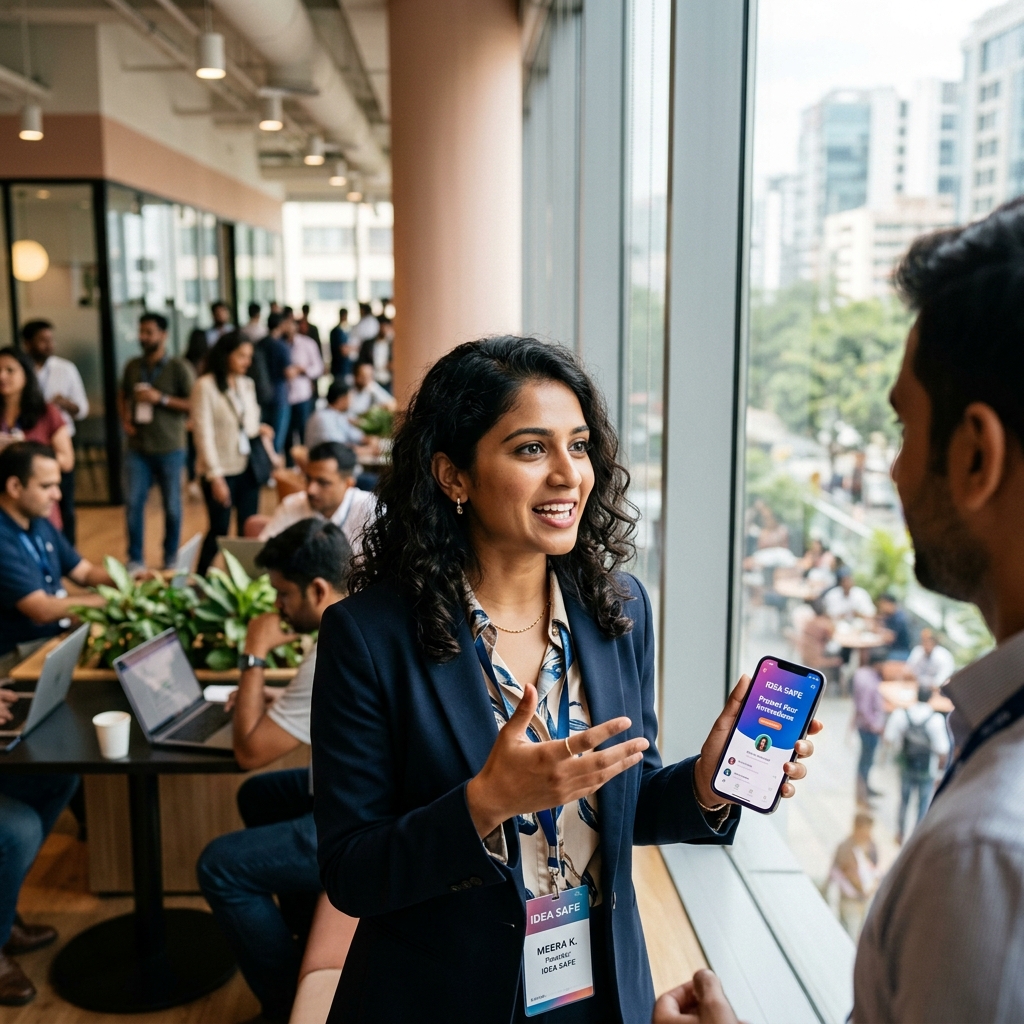
A young attorney and inventor working together with AI drafting tools in a modern accessible co-working space

Same expertise. Same judgment. Same professional responsibility.
Now accessible to the inventor who could not previously afford it.

Act IV: The honest reason

Why I keep thinking about the woman at the startup event

I want to be transparent about something. When I started building eety.ai, the specific person I kept thinking about was not the large law firm. It was not the Fortune 500 IP department with a dedicated patent counsel. It was the founder at a startup event, with a notebook of claims she had drafted herself, who had already run the numbers and concluded that professional patent help was not for her budget.

Not because I was being strategic about market segmentation. Because that situation struck me as genuinely wrong. Someone had built something novel; something worth protecting; and the system had told her, via pricing, that she was not the intended customer of the protection system.

That is not an edge case. That is the majority of inventors in the world. It is particularly true for first-generation entrepreneurs, for inventors in emerging markets, for academics who do not have commercialisation support, and for individual inventors who are working on ideas that matter but do not have the resources of an established technology company behind them.

The conversation about AI and patent jobs is almost entirely about the attorneys. Which is understandable; that is who is having the conversation. But the inventor at the event is also part of this story. And her presence changes what the story is about.

AI in patent drafting is not a zero-sum story. It is not about the same number of patents being filed more cheaply. It is about a much larger number of patents being filed; by inventors who currently exist entirely outside the system.

That is good for inventors. It is also good for the attorneys who serve them. The market that grows is the one everyone benefits from. :)

The close

What happened to her, eventually

I stayed in touch with the inventor from the startup event. About eight months after we met, her competitor launched something remarkably similar. She had been shipping quietly; her product was better, she knew the space better, and she had a head start. But without a patent, she had no legal recourse and no way to slow them down.

She did not say "I told you so" to herself. She said something that has stayed with me. "I wish the cost had just been different. If it had been a thousand dollars instead of five, I would have done it the week I built the prototype. I just needed it to feel possible."

I needed it to feel possible.

That sentence is why I am still building this. Not to displace anyone. To make the system feel possible for the people it currently prices out. If AI tools in patent drafting do that well, the total amount of professional work in the world does not shrink. It grows; because the universe of people who can access that work finally grows to include her. :(

For firms ready to expand their reach

Help the inventor who
could not afford you. Now she can.

eety.ai dramatically reduces the mechanical hours in every patent application. Which means the attorneys using it can serve clients at price points that were previously not viable. The invention gets protected. The attorney gets the client. Everyone wins.

In This Series