A senior patent attorney at a mid-sized firm oce described to me what she called the "twelve-page surprise." She would set an AI tool to work on a filing. Come back after the session had been running. Read twelve pages of well-formatted, professionally structured text. And then, quite casually, on page nine, find a mechanism described with complete confidence that the inventor had never mentioned. The tool had filled the gap. Plausibly. Wrongly.
The rework from that kind of discovery is not minor. It is not fixing a sentence. It is going back to the understanding, identifying where the gap was, getting new information from the inventor, and then re-assessing every section that may have built on the incorrect assumption. A question asked at the right moment costs two minutes. The same gap discovered on page nine costs two days.
Preparation is not caution. It is efficiency.
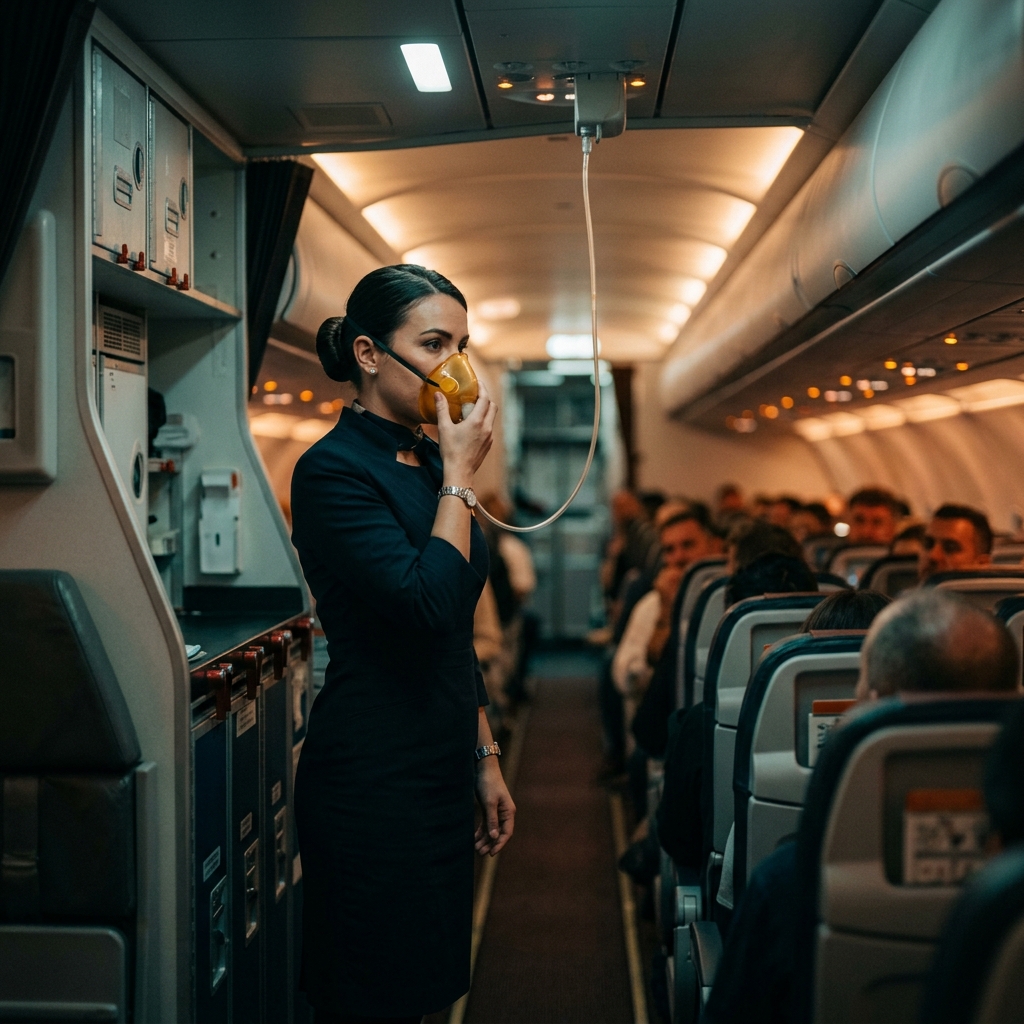
Every passenger on every commercial flight has experienced the safety briefing. Exit locations. Seatbelt instructions. Oxygen masks. Lfe vests. The crew runs through it before every flight, on every route, whether it is a forty-minute hop or a fifteen-hour long-haul. The experienced traveller knows the routine so well they barely listen. They got done with paying attention to it a long time ago.
Nobody runs the safety briefing because they expect the flight to go wrong. They run it because aviation is a domain where the cost of discovering a gap mid-process is so high that the cost of the briefing is trivially small by comparison. And because if you brief well, the probability of an uncontrolled mid-process surprise is reduced to something close to zero.
The briefing does not happen after boarding. It happens before departure. That sequencing is the whole point. Preparation comes before movement; always, without exception, regardless of how routine the journey looks.
"A question asked before drafting costs two minutes. The same gap discovered after drafting costs two days. The briefing exists precisely because this asymmetry is real."
What happens when tools skip the briefing
Most AI patent tools board first and brief never. They accept whatever disclosure is provided, complete or not, and begin generating text immediately. No system stops to ask whether the solution mechanism is clearly articulated. No system flags that the novelty has not been established relative to prior art. No system notices that the inventor described what the product does in three different ways that are not quite consistent with each other.
The tool proceeds. It fills gaps with plausible text. It presents the output with the same polished confidence whether it has deep context or is working from an incomplete description. And the attorney, who is trusting the tool to surface what it does not know, receives a draft that looks complete, reads well, and contains structural problems that will not become visible until prosecution.
I am not sure most tools even have a concept of "not knowing something." They are built to produce output; not to assess whether the output should be produced yet. The asymmetry between confident text and correct text is invisible inside the output itself.
What the briefing looks like in eety
Before eety generates a single word of legal text, it builds a structured model of the invention across fifteen dimensions. If any critical dimension is amber or red, a missing mechanism, an unresolved novelty question, an ambiguous component interaction, eety stops. It does not produce a partial draft. It generates precise, targeted questions for the inventor, specific to the exact gaps in its understanding.
These are not generic questions. "Can you describe your invention?" is not a useful clarifying question; it is a sign the system has not tried had enough to understand what it was given. The questions eety generates are specific: if the system does not understand how two components communicate, it asks about that communication specifically. If the novelty dimension is under-specified, it probes the technical differentiation from existing approaches. Each answer feeds back into the understanding model before any drafting begins.
Many attorneys forward these questions directly to their inventor by email. A structured second round of clarification that replaces a follow-up call and accelerates the intake process. The point is not that eety asks questions; it is that eety asks the right questions, at the right moment, and does not proceed until the answers are sufficient.
The briefing does not happen after the draft. It happens before. That sequencing is the whole point. :)