"The draft looks good. Send it for filing."
I have said those words. I have also, two years later, sat in a prosecution review wishing I had read the draft more carefully before saying them. The problem was not that the draft was wrong in any obvious way. It was that I had no real way to verify it was right. There was no trail. No source. No receipt. I had trusted the output the way you trust a restaurant bill without reading it. Usually fine. Occasionally very much not fine.
That experience is what pushed me to think differently about what AI in patent drafting actually needs to do. Not faster. Not longer. Different.
The fire-and-forget problem
Most AI tools that touch legal drafting operate on what I have started calling the fire-and-forget model. You put in a disclosure, you get back a draft. The draft looks plausible; it has the right sections in the right order, the language sounds patent-like, the claims are grammatically structured. And then you sit with it and ask yourself: where did this come from?
That question matters enormously in patent law and almost nowhere else at the same intensity. Every word in a patent claim is a future legal position. Every element in the description is a potential limitation or an expansion of scope. If the AI silently filled a gap in the disclosure with its own assumption; and it will, because that is what language models do by design; you now have a liability sitting quietly inside a document you are about to make permanent.
The issue is not intelligence. These models are extraordinarily capable. The issue is accountability. There is no receipt.
"Speed was never the bottleneck in patent drafting. Trust was. And trust requires the ability to verify, not just the ability to produce."
What a quality-obsessed attorney actually needs
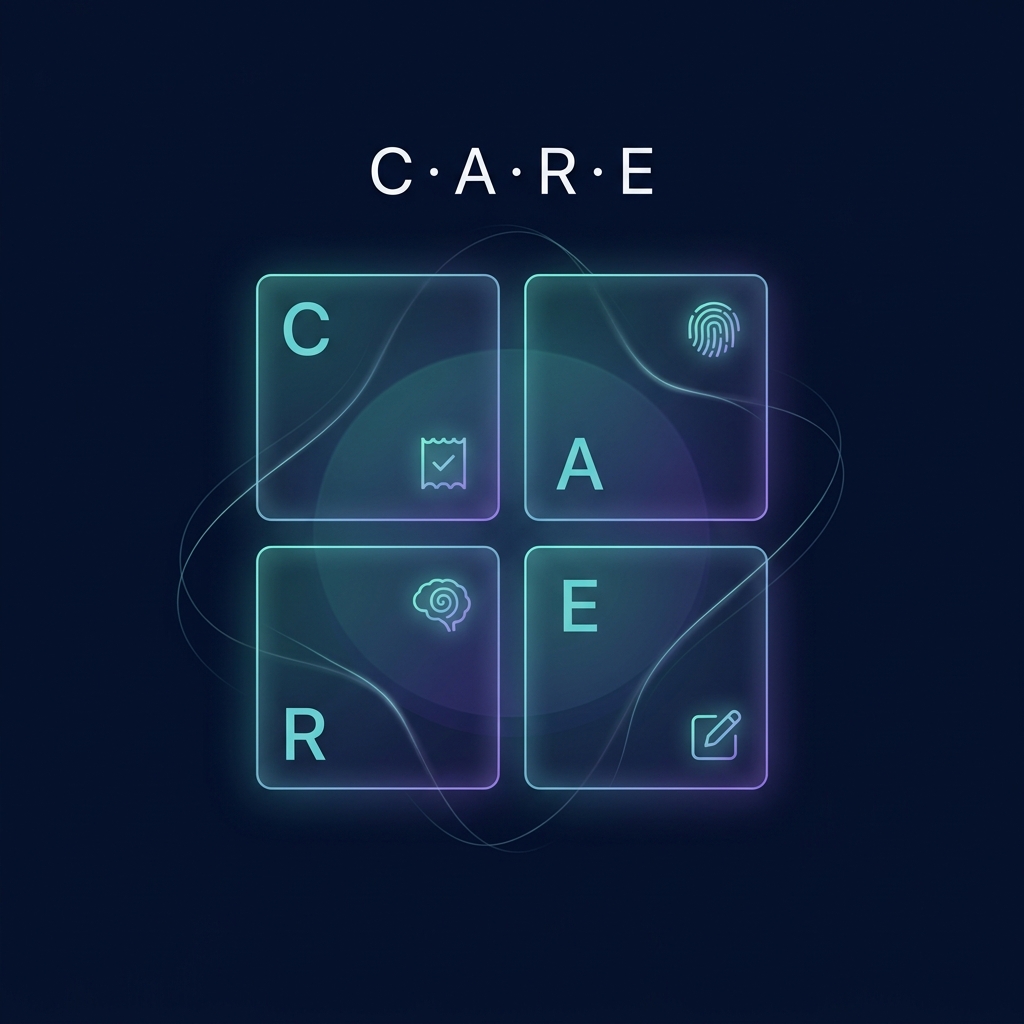
I spent more than a decade in the patent world before I spent years in AI. That combination is rarer than it sounds; most people in this space come from one side or the other. What it gave me was a very clear picture of what an attorney obsessed with quality actually requires from a drafting tool. It is not more speed. It is not a prettier interface. It is four things; and we call them CARE.
Checkable — Every output needs a receipt.
When the AI makes a claim about your invention, you should be able to see exactly where that conclusion came from. Source-mapped understanding, open questions surfaced before drafting, plan approval, diff history. Nothing in the dark.
Read the full article →
Adaptive — It should sound like you wrote it.
Patent attorneys have a voice. Not in the literary sense; in the technical sense. Claim architecture, functional language choices, specification rhythm. eety learns your style from prior work and applies it. The output is not generic patent language. It is yours.
Read the full article →
Retentive — It grows with your matter, not just your session.
Most AI tools are amnesiac by design. The session window is their entire world. eety carries the full history of a matter; invention understanding, figure decisions, claim architecture choices. Return three weeks later and you are continuing a conversation, not starting one.
Read the full article →
Editable — The attorney is always in control.
Every section is directly editable. Every AI suggestion can be overridden, refined, or discarded. When the attorney makes a direct edit, the system records it as a decision; not as a correction of an error. The tool does not argue. It does not undo your work. It learns from it.
Read the full article →
Why CARE is a design constraint, not a feature list
I want to be clear about something. CARE is not a marketing label we attached to things eety already did. It is the design constraint we built around. And design constraints that are actually followed make things harder to build; not easier.
Making outputs checkable means the system has to do the work of sourcing every claim it makes, surfacing every gap it finds, and presenting the drafting plan for attorney approval before a single word is written. That is slower than just generating. It is also the only approach that makes the output defensible.
Making the system adaptive means building a style engine that learns from prior work, applies it to new matters, and tracks whether the attorney is overriding it. That is harder than producing generic patent language. It is also the only approach that produces a draft the attorney actually recognises as theirs.
Making it retentive means building matter-level persistence that survives session boundaries, carries figure decisions forward, and maintains the claim architecture across the life of a prosecution. That is more expensive than a stateless session. It is also the only approach that makes the tool useful beyond the first conversation.
Making it editable means building a system that treats every attorney intervention as a decision rather than a correction; that records it, learns from it, and never silently undoes it. That requires a completely different relationship between the tool and the attorney's judgment. It is also the only relationship that actually respects it.
"The expert is sitting in the chair. Not inside the model. A tool that has genuinely understood that will behave very differently from one that merely claims to."
Most AI agents fire and forget
I did not arrive at CARE from a whiteboard session. I arrived at it from watching what happens when you do not have it; when the draft cannot be traced, when it sounds like nobody wrote it, when returning to a matter three weeks later means starting from scratch, when an edit you made yesterday was silently overwritten today.
Each of those failures has a real cost. In attorney time. In client trust. In the quality of the protection the patent actually provides. They are not hypothetical edge cases; they are what happens when you build a drafting tool around speed and plausibility rather than around the attorney's actual working relationship with their work.
eety was built to be different. Not louder about it; just different in the ways that show up when you use it for real matters, with real clients, under real time pressure.
Most AI agents fire and forget. eety CARES. :)
See It In Action
Try eety.ai on a real matter and see what a tool that actually CARES looks like.
Start Free →